Mardi, 31 mars⋅-11:00
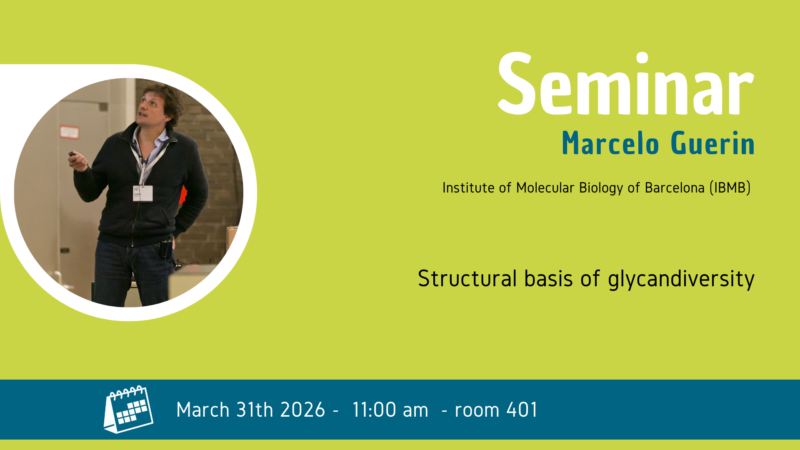
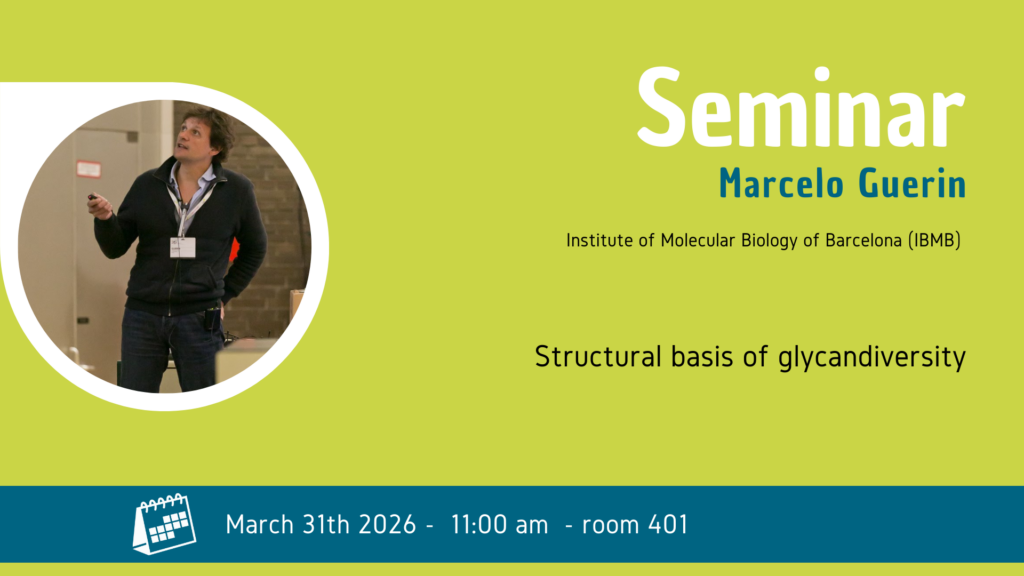
Séminaire de Marcelo Guerin, invité EAD1
Structural basis of glycandiversity
Glycosylation is one of the most prevalentposttranslational modifications of proteins and lipids. It markedly influencestheir structure and function, and plays a central role in nearly every aspectof biology. A deeper understanding of glycosylation —and the ability toprecisely and rationally modulate it— are essential for advancing ourfundamental biological knowledge and for developing innovative therapeuticsacross a wide range of human diseases. In this talk, I will present our recentfindings and advances in the following research areas:
(i) Bacterialcell envelope biosynthesis and remodeling, and its impact in host-pathogeninteractions and vaccine development,
(ii) Molecular basis of glycogenmetabolism regulation in bacteria,
(iii) Unveiling the role of gutmicrobiota glycan processing machinery in human health and disease.
In our research, we are using a multidisciplinary approach. To determinehigh-resolution structures, we employ X-ray crystallography and single particlecryo-electron microscopy. To obtain mechanistic insight, we combine structuralstudies with molecular biology, protein/membrane biochemistry/biophysics andAI-driven computational methods. These approaches are frequently integratedwith collaborative efforts in genomics, transcriptomics, proteomics, cellbiology, synthetic organic chemistry and NMR spectroscopy.
Mardi, 31 mars⋅-14:00
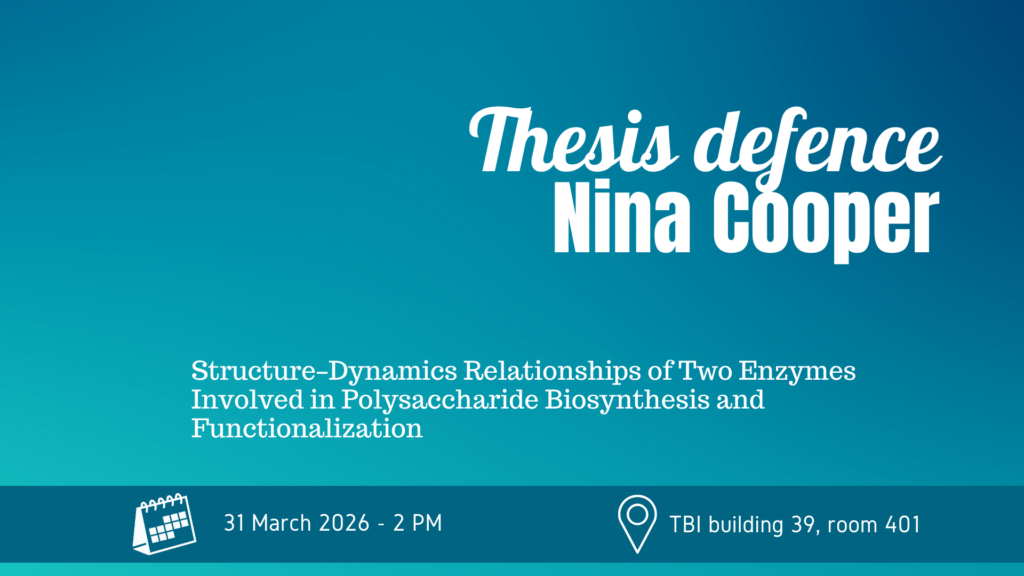
Soutenance de thèse de Nina Cooper
My thesis is entitled: Structure–Dynamics Relationships of Two Enzymes Involved in Polysaccharide Biosynthesis and Functionalization.
Jeudi, 2 avril⋅De 11:00
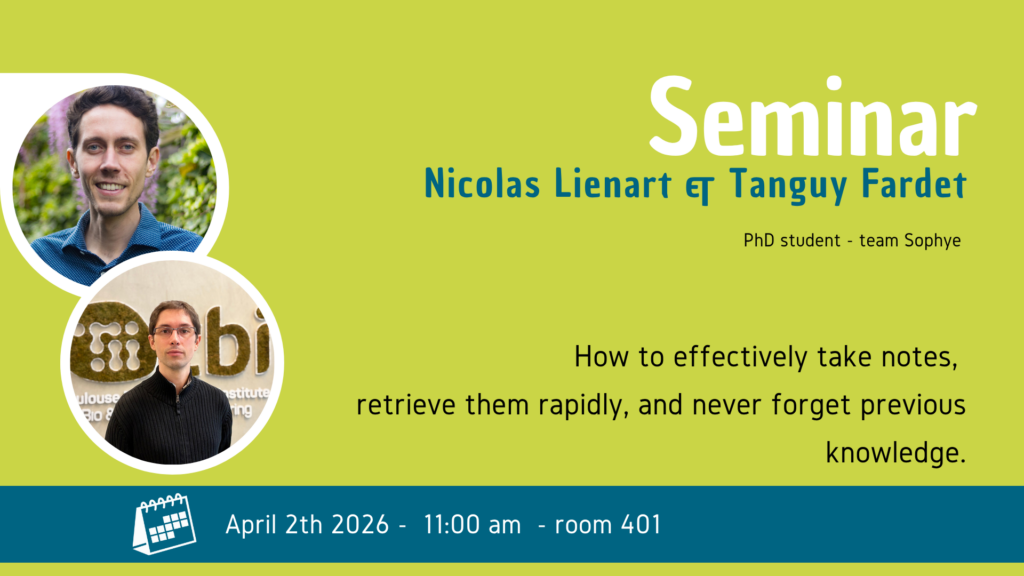
Séminaire Nicolas Lienart
How to effectively take notes, retrieve them rapidly, and never forget previous knowledge.
Abstract: You probably experience occasional or regular difficulties trying to retrieve notes when needed or to remember things, whether technical or not. Personal knowledge management (PKM) tools and methods can help with these problems. Throughout this seminar, we will discuss the common issues with “conventional” methods and present some key conceptual and practical solutions for efficient and future-proof note-taking.
We will proceed with a demonstration of “Obsidian” and “Logseq”, two knowledge-oriented applications that assist with knowledge organization. In particular, we will show how they can be helpful in your research, despite different contexts and workflows, and how they can interface with tools you might already be used to (e.g. Zotero).
We will finish by addressing specific questions of the audience regarding the two applications. While not mandatory, do not hesitate to install and try them on your computer (or on your phone) beforehand.