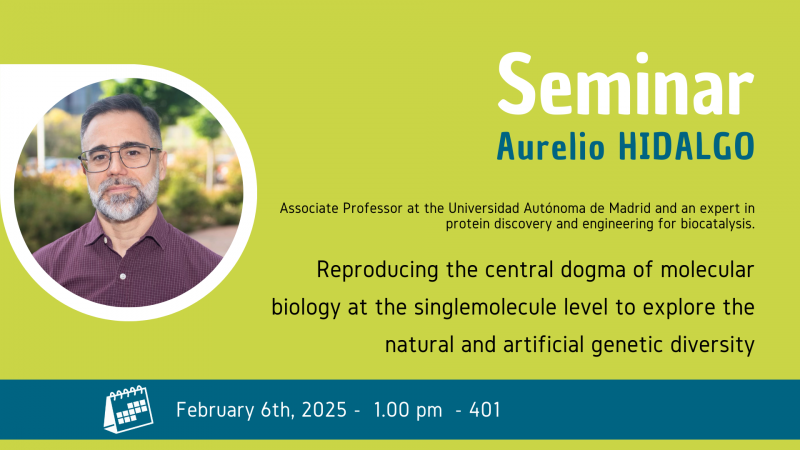
Jeudi, 6 février⋅13:00 à 14:00
Séminaire Aurélio Hidalgo
Reproducing the central dogma of molecular biology at the singlemolecule level to explore the natural and artificial genetic diversity
Abstract :Microorganisms represent an unfathomable source of enzymes for the bioeconomy, but only a small fraction of them can be cultivated in the laboratory. For this reason, it remains an underexplored source of bioactive compounds, carbohydrate polymers and enzymes, among others. Sampling the natural microbial diversity, screening, identifying and isolating the relevant enzymes is cumbersome, expensive and results in a heavy environmental burden, low yields, high costs and long times to market.
Throughout the course of EU-funded proyects CarbaZymes, MetaFluidics, RadicalZ and BlueTools, we have been developing (and will develop) technology to overcome the limitations both for the study of microbial communities and their “econological use” and to tailor the discovered enzymes towards industrial applications. Our methods for enzyme discovery in the natural and artificial diversity make use of whole cells (in vivo) or cell-like compartments (in vitro) for recombinant expression, reducing the average time for enzyme discovery and evolution while increasing the amount of sampled sequence space.
This work has received funding from the European Union’s Horizon 2020 and Horizon Europe’s Research and Innovation programme under Grant Agreements 685474, 101005560 and 101081957.
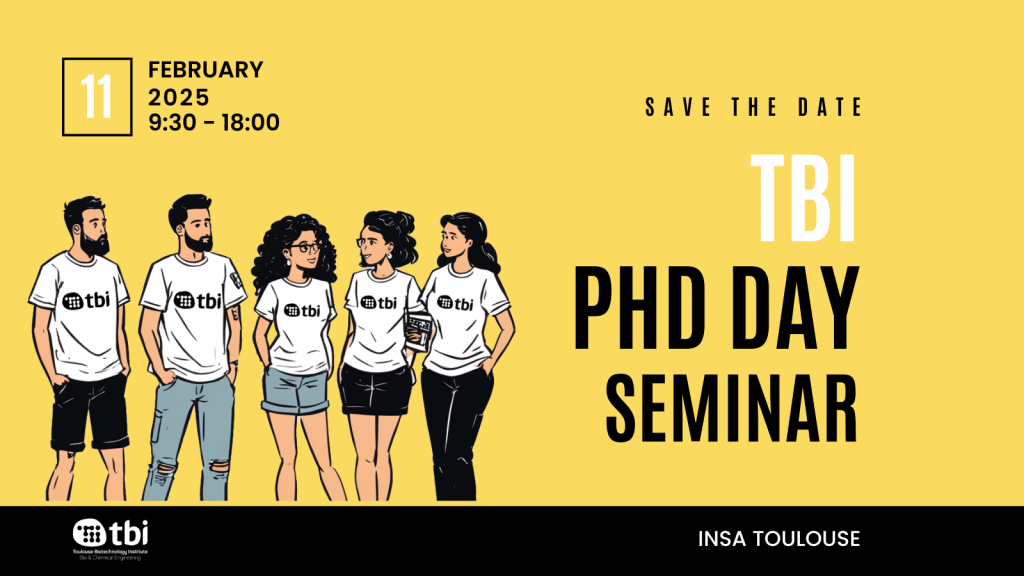
Mardi, 11 février
PhD Day
Jeudi, 13 février⋅13:00
Séminaire Bin Yang
Innovating Towards a Sustainable Bioeconomy Future